


Teachers are responsible for students failure debate points
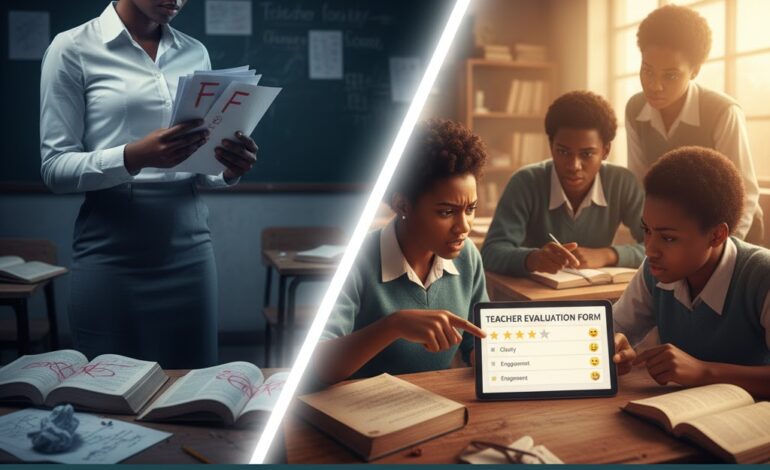
Looking for the winning arguments for your next school debate? You’ve come to the right place.
Today, we are tackling a very common and controversial topic. This post provides strong teachers are responsible for students failure debate points, supporting the motion that teachers are indeed to blame.
Before we jump in, let’s quickly define the terms. “Responsible” means being the primary cause of something, the person to blame. And “failure” means a student consistently not passing exams, not understanding the subject, or not achieving their academic potential.
Disclaimer: Let’s be clear. This article is an educational template for a school debate. It’s designed to help you argue one side of the motion powerfully. It does not mean that all teachers are bad or that students and parents have no role to play. This is just a script to help you win your argument.

Winning Debate Points on Why Teachers Are Responsible for Students’ Failure
Here are 7 winning points, written as a first-person script you can adapt and use at the podium.
1. The Impact of Poor Teaching Methods
Good day, Mr. Chairman, panel of judges, accurate timekeeper, co-debaters, and everyone present.
My first and most important point is that poor teaching methods directly lead to student failure. A teacher is a guide. If the guide doesn’t know the road or explains it in a confusing way, how can the traveller—the student—reach their destination?
Think about it. Some teachers just “pour” notes on the board and command students to “copy,” without explaining. They don’t use practicals, real-life examples, or modern aids to make difficult subjects like Mathematics, Physics, or Chemistry easy to understand. The student is left confused, and this confusion is the seed of failure.
2. The Teacher’s Attitude and Lack of Motivation
Now, let’s talk about the teacher’s attitude. Have you ever seen a teacher who is always angry, who insults students, or who clearly just doesn’t care about their job?
This kind of attitude kills a student’s desire to learn. If a student is afraid to ask questions because the teacher will call them “dull” or “stupid,” how will they learn? This teacher negligence creates a toxic student’s learning environment. When a teacher’s attitude demotivates a student, the teacher is directly responsible for that student’s failure.
3. Incompetent Teachers and a Weak Foundation
The truth is, some teachers are simply not qualified for the job. They are incompetent teachers.
When a teacher does not understand the subject matter properly, they cannot pass on correct knowledge. They pass on confusion. This is very dangerous, especially in primary school or JSS1, where a child’s educational foundation is built.
If a teacher builds a weak foundation in English or Maths, that student is almost guaranteed to fail in the future. That failure is not the student’s fault; it is the fault of the teacher who built the faulty foundation.
4. Lack of Support and Personal Attention
My co-debaters, a teacher’s job doesn’t end when the bell rings. A key part of teaching is providing support. When a teacher sees a student struggling, it is their responsibility to find out why and offer help.
But many don’t. They ignore the weak students and focus only on the “bright” ones who are easy to teach. This lack of support is a form of negligence. Good classroom management isn’t just about keeping quiet; it’s about making sure all students are carried along. When a teacher abandons the struggling students, they are failing them.
5. Unfair Assessment and Favouritism
Another key point is bias. How can a student pass when the teacher is biased against them?
Some teachers have “favourites.” They give some students extra help or even “marks” they don’t deserve, while they punish others. When a student knows that even if they try their best, the teacher will still fail them because of this bias, they simply stop trying. This is a clear case where the teacher is 100% responsible for that student’s academic failure.
6. Teachers Are the ‘Contractors’ of Education
Let me use an example. If you hire a building contractor to build a house and the house collapses, who do you blame? The contractor!
A teacher is a professional “contractor” paid by the government or parents to build a child’s brain. They are trained professionals. If the student’s academic performance is always poor, we must first question the professional in charge.
Parents hand over their children for 8 hours a day, trusting the teacher to do their job. Therefore, the teachers are responsible for students failure debate points because they are the professionals in charge of the entire process.
7. Setting a Bad Example (Absenteeism)
Finally, a teacher who is always late, skips class, or comes to class unprepared is setting a bad example.
They are, by their actions, teaching the students that education is not important and that hard work doesn’t matter. If the teacher doesn’t take the job seriously, why should the students take their learning seriously? This lack of seriousness from the teacher is a direct, clear path to student failure.
Frequently Asked Questions (FAQs)
Q: What is the strongest argument the other side will use? A: Your opponents will almost certainly argue that students (and their parents) have the primary responsibility. They will talk about students being lazy, playing games instead of reading, not doing homework, or having a bad attitude from home. Be prepared to argue why the teacher’s role is more important.
Q: How do I conclude this debate speech? A: A strong conclusion is to summarize your main points (e.g., “As I have proven with my points on poor methods, bad attitudes, and incompetence…”). You can end with a powerful proverb, like: “A student is like soft clay, and the teacher is the potter. If the pot comes out badly shaped, we must first question the potter.”
Q: Are teachers really the only ones to blame? A: For the purpose of this debate, yes. Your job is to stick 100% to your motion. In real life, it’s more complicated, but in a formal debate, you must defend your side completely.
Conclusion / Summary
So there you have it! These points show that from their teaching methods to their personal attitudes and professional competence, the teacher has a direct and powerful impact on a student’s success or failure.
Final Disclaimer: Remember, this article is for educational debate purposes only. We are arguing one side of a motion. In our society, we value the hard work of all the good, dedicated teachers who do their best every day. This template is just a tool to help you understand this motion and argue your side effectively.
What do you think? Do you agree with these points? Drop your opinions in the comments section below! Also, feel free to share this post with your coursemates or those in your debate team.







1 Comment
[…] here to give you the winning Computers and artificial intelligence ai will soon replace teachers debate points you need to build an unbeatable […]