Night Owl vs. Early Bird: When is the Best Time to Study to Pass WAEC & JAMB?

Night Owl vs. Early Bird: When is the Best Time to Study to Pass WAEC & JAMB?
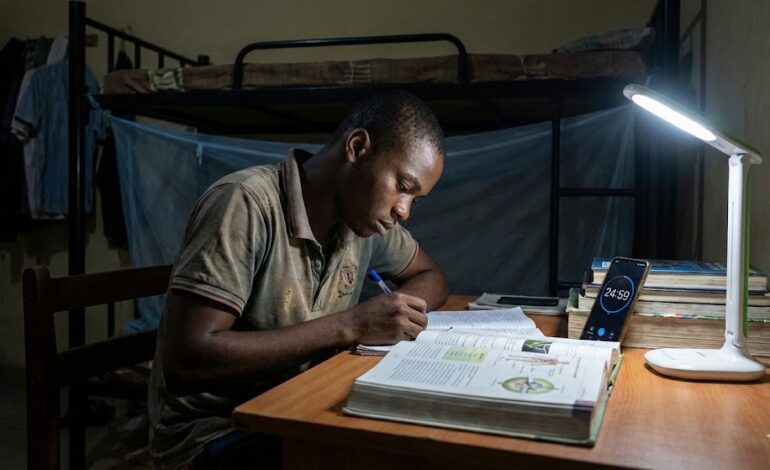
We all have that one friend. You know the one—they stay awake aggressively until 3:00 AM, burning the midnight candle (or rechargeable lamp) to finish a syllabus. We call them the “TDB” (Till Day Break) masters.
Then, there’s the other friend. The one who sleeps early but is up by 4:00 AM sharp, claiming their brain is “fresh” and ready to absorb everything.
So, here is the big question: Between the Night Owl vs. Early Bird: when is the best time to study?
If you are preparing for serious exams like WAEC, NECO, or trying to jam your way into university through JAMB, you’ve probably tried both. Maybe you forced yourself to stay up late and ended up sleeping on your textbook. Or maybe you set an alarm for 5 AM and just snoozed it until 7 AM.
The truth? There is no single “correct” answer. But one of these methods will likely get you that admission, and the other might just give you a headache. Let’s break it down so you can pick the side that fits you.

1. The Night Owls (The “TDB” Gang)
These are the students who come alive when the rest of the house is snoring. For a Night Owl, 10 PM isn’t bedtime; it’s just the beginning of the work day.
Why studying at night works:
-
Zero Distractions: This is the biggest advantage. No younger siblings screaming, no generator noise from the neighbor, and most importantly, no parents sending you on errands. You can’t be asked to “help wash plates” when everyone is asleep.
-
Creativity Flows: Some studies suggest that the brain solves creative problems better when it’s a bit tired. If you are writing an essay or trying to figure out a complex coding problem, the night might be your friend.
-
The “Band A” Factor: Let’s be real about the Nigerian situation. sometimes, the light (electricity) is just better at night.
The danger zone: However, the night shift isn’t for everyone. The biggest risk is sacrificing sleep. If you have an 8 AM class or a morning exam paper, studying until 4 AM is a suicide mission.
You might feel like you’ve read everything, but a sleep-deprived brain struggles to recall information in the exam hall. Plus, relying on energy drinks or coffee to stay awake can lead to a serious crash later.
2. The Early Birds (The “4 AM” Crew)
These students believe in the saying, “Early to bed, early to rise.” They knock out by 9 PM and are up before the cock crows.
Why studying in the morning works:
-
The “Fresh Brain” Theory: After a good night’s sleep, your brain is reset. It’s like a phone that has been fully charged. You tend to have better concentration and can memorize facts faster. This is why many teachers advise reading subjects like Biology or Government in the morning.
-
Natural Light: Natural daylight is actually better for your eyes than the blue light from your phone or lamp.
-
Exam Simulation: Most major exams (JAMB UTME, Post-UTME) happen in the morning. Training your brain to be active at 7 AM prepares you for the actual D-Day.
The danger zone: The bed is sweet. That is the biggest enemy here. Waking up when the weather is cool and the blanket is warm requires serious discipline.
Also, if you live in a noisy hostel or a loud neighborhood, the “quiet time” in the morning doesn’t last long. By 6 AM, the world is awake, and your study vibe might be killed by noise.
Recommended: [Link to internal article: 5 Study Hacks to Remember Everything You Read]
So, Who Wins?
Ideally, the debate of Night Owl vs. Early Bird: when is the best time to study comes down to your biology. Scientists call it your “circadian rhythm.” It’s your body’s internal clock.
Some people are genetically wired to be alert in the evening, while others peak in the morning. Fighting your biology is why you feel frustrated.
According to research by the [Link to external authority: Sleep Foundation or similar], teenagers actually have a biological shift that makes them stay up later naturally. But school schedules force you to wake up early. It’s a mess.
But don’t use “biology” as an excuse to be lazy. You need to find your “Magic Hour.”
How to Find Your “Magic Hour” (A Simple Test)
Don’t just copy your intelligent friend. What works for Chinedu might fail for Tolu. Try this simple experiment for one week:
-
Day 1-3 (Morning Shift): Sleep by 10 PM. Wake up at 4 AM. Read a difficult topic (maybe Chemistry or Physics). Track how much you remember by afternoon.
-
Day 4-6 (Night Shift): Sleep in the afternoon for an hour. Start reading by 10 PM and stop by 1 AM. Track your retention.
-
Compare the Results: Be honest with yourself. During which session did you find yourself scrolling TikTok instead of reading? When did you understand the topic faster?
Conclusion
Whether you are a Night Owl or an Early Bird, the goal is the same: seeing that “A” or “B” on your result sheet.
Don’t force yourself to wake up at 4 AM if you will just spend the first hour dozing on the table. And don’t stay up till 2 AM if you know you have a Maths class at 8 AM.
Consistency beats timing. It is better to study for two focused hours at a “bad” time than to spend six hours staring at a book while daydreaming.
Over to you: Which team do you belong to? Are you Team TDB or Team Early Bird? Or are you the “Ghost Student” who only reads 30 minutes before the exam? Let me know in the comments below!