FG Offers 40% Salary Increase to ASUU to Avert Strike
FG Offers 40% Salary Increase to ASUU to Avert Strike
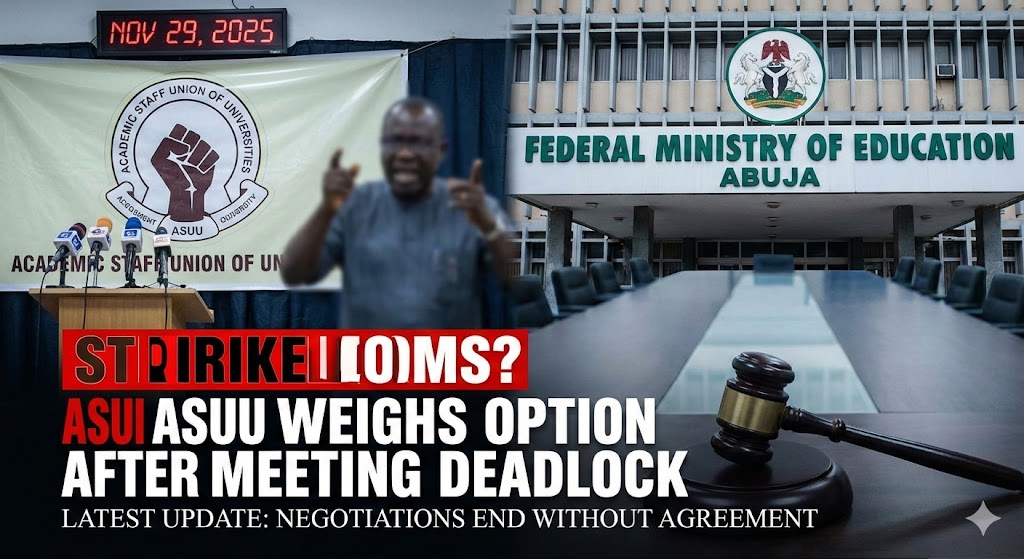
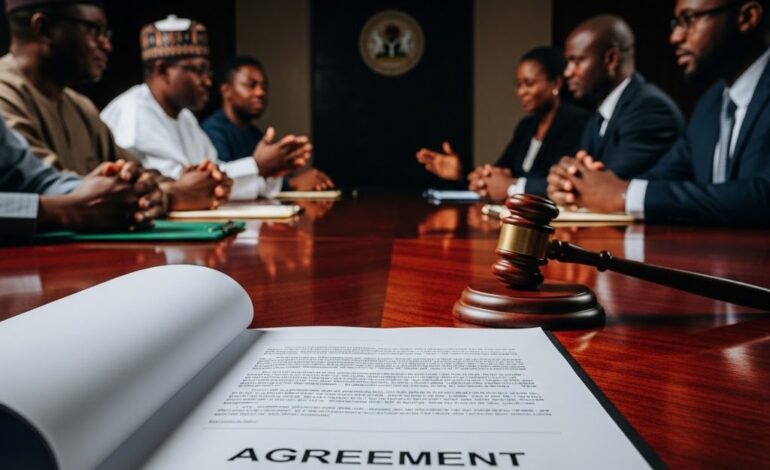
The looming threat of another nationwide academic shutdown has been paused. As of Tuesday, December 2, 2025, the Federal Government (FG) has formally proposed a 40% salary increase for academic staff in Nigerian public universities. This significant development emerged from a high-stakes closed-door meeting between the government’s renegotiation team, led by Alhaji Mahmud Yayale Ahmed, and the leadership of the Academic Staff Union of Universities (ASUU).
For students who have been on edge following the expiration of ASUU’s one-month ultimatum in late November, this offers a fragile lifeline.
The proposal is not just a verbal promise. It is contained in a progress report signed by the ASUU President, Prof. Chris Piwuna, which outlines the resolutions reached on critical issues including funding, university autonomy, and staff welfare. While the threat of a strike has not been entirely extinguished, the union’s National Executive Council (NEC) is currently briefing zonal branches on the offer. The mood is cautious. Many lecturers are wary of government promises, yet the consensus suggests a willingness to accept the offer to prevent further stagnation of academic earnings.
The Breakdown: What is on the Table?
The negotiations have been intense. Following a warning strike in October 2025 that paralyzed activities for two weeks, the pressure was on the Ministry of Education to deliver a tangible solution.
According to documents from the negotiation room, the new deal includes:
- 40% Base Salary Increase: A direct upward review of the Consolidated University Academic Salary Structure (CONUASS). This is intended to mitigate the harsh economic realities of inflation affecting lecturers.
- 12% Earned Academic Allowances (EAA): The government has agreed that the annual cost of implementing EAA will be equivalent to 12% of the appropriated academic staff salaries for each university. This solves a major administrative bottleneck.
- Periodic Reviews: A crucial clause was inserted mandating a comprehensive review of the agreement every three years.
- Autonomy Clauses: The agreement reinforces university autonomy, specifically barring the application of establishment circulars that contradict the specific laws and statutes of individual universities.
This package aims to replace the controversial Nimi Briggs Committee recommendations, which had been a point of contention for over two years.
Context: How We Got Here
To understand the gravity of this 40% offer, we must look at the timeline.
Tensions flared in May 2025, shortly after Prof. Chris Piwuna succeeded Prof. Emmanuel Osodeke as ASUU President. Piwuna, a Professor of Medicine and Consultant Psychiatrist at the University of Jos, inherited a union frustrated by years of deceit. By October 2025, the union declared a two-week warning strike, citing the government’s “nonchalant attitude” toward the renegotiation of the 2009 agreement.
The government, represented by the Minister of Education, Dr. Tunji Alausa, initially claimed that all demands had been met. This statement backfired, inflaming union members and leading to the ultimatum that expired last weekend.
The stakes were incredibly high. Students were already fatigued. A full-blown indefinite strike in December would have shattered the 2025/2026 academic calendar. The intervention by the Yayale Ahmed-led panel was a last-ditch effort to save the semester.
Analysis: Is 40% Enough?
A 40% raise sounds substantial on paper. In reality, it is a catch-up mechanism.
Inflation in Nigeria has eroded the purchasing power of the naira significantly since the last major salary review. For a Professor earning roughly ₦416,000 monthly, a 40% hike brings the figure closer to ₦580,000. While an improvement, it still lags behind the “African Average” salary structure that ASUU has long campaigned for.
However, the strategic win for ASUU here might be the EAA formula. By pegging Earned Academic Allowances to a fixed percentage (12%) of the salary bill, the union has potentially solved the perennial problem of “outstanding allowances” accumulating into billions of naira. It automates the process.
The “No Work, No Pay” Elephant One issue remains unresolved in the public eye: the withheld salaries from the 2022 strike. While this new agreement addresses future earnings, the backlog of unpaid wages remains a sore point for many members. It is a double-edged sword. Accepting the 40% deal moves the system forward, but it may require letting go of past grievances to secure the future.
Expert Opinions and Union Reactions
Reactions from within the academic community are mixed.
Prof. Chris Piwuna (ASUU President): In the briefing document circulated to members, Piwuna noted that while the government’s initial offers were “grossly inadequate,” the current structure was accepted by the NEC to avoid “stagnation of our earnings over a protracted period.” His tone suggests a pragmatic shift in leadership style—prioritizing incremental gains over indefinite standoffs.
Dr. Tunji Alausa (Minister of Education): The Minister has maintained that the administration of President Bola Tinubu is determined to “ensure our students stay in school.” The Ministry views this 40% offer as a demonstration of good faith and a fulfillment of the President’s directive to end the cycle of strikes.
Student Union Voices: The National Association of Nigerian Students (NANS) has expressed cautious relief. “We are tired of being the grass that suffers when two elephants fight,” a NANS representative stated in Abuja. “If 40% keeps our classrooms open, then sign it.”
Future Outlook: What Happens Next?
The ball is now in ASUU’s court.
Over the next 48 to 72 hours, zonal branches across the country—from UNILAG to ABU Zaria—will hold congresses to vote on the NEC’s recommendation. If the branches ratify the proposal, a formal signing ceremony will likely occur in Abuja before the end of the week.
The Likely Scenario: The strike will be shelved. The pragmatic acceptance of the 40% rise indicates that the union leadership is keen to secure a win for its members before the fiscal year ends.
The Worst-Case Scenario: Hardline branches could reject the offer, demanding the payment of withheld salaries as a precondition. This would force a return to the trenches. However, given the NEC’s endorsement, this is unlikely.
For now, students should continue their academic activities but remain vigilant. The storm clouds have parted, but the sky isn’t entirely clear yet.
Key Takeaways for Students
- Classes Continue: No immediate strike is expected this week.
- The Deal: Lecturers are likely to accept the 40% pay rise.
- Stability: If signed, the 3-year review clause could mean a few years of uninterrupted calendars.
- Watch Out: Confirm updates from your local chapter chairpersons on Wednesday and Thursday.
This story is developing. We will update this page as branch voting results trickle in.

![How to Remember What You Read Without Taking Notes: 5 Shocking Methods [Stop Failing Now]](https://debateszone.name.ng/wp-content/uploads/2025/11/Gemini_Generated_Image_mzvlzqmzvlzqmzvl.png)