


Debate: Hard Work is More Important Than Talent (5 Winning Points)
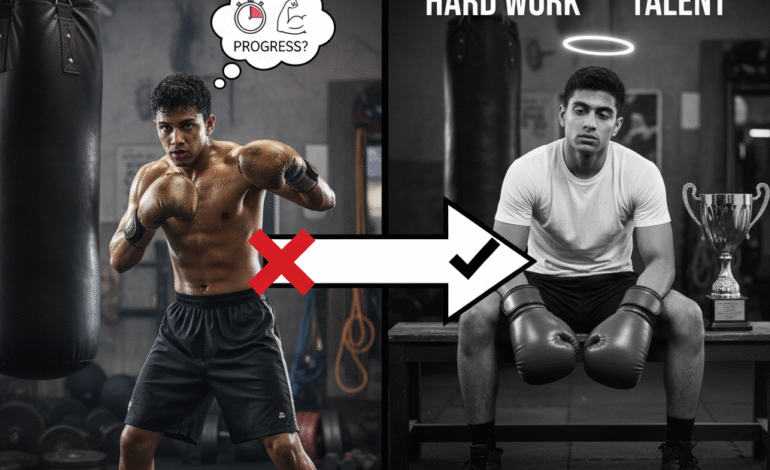
Debate: Hard Work is More Important Than Talent (5 Winning Points)
Good day, debaters!
Are you looking for the winning hard work is more important than talent debate points? You’ve come to the right place. You’ve been given the task of supporting the motion, and I’m here to provide the script to help you win.
Before we start, let’s be clear on our terms. When we say ‘talent,’ we mean a natural, in-born ability to do something well. It’s the “gift.” When we say ‘hard work,’ we mean the effort, the consistency, the practice, and the perseverance you put in, day in and day out.
Disclaimer: This article provides a complete script for supporting one side of this educational debate. We are here to argue that hard work is more important, not to say that talent is useless. The goal is to win the debate, and these points will help you do just that.
Let’s get to the script.
5 Winning Hard Work is More Important Than Talent Debate Points
1. Good Day, Mr. Chairman… (Your Introduction)
Good day, Mr. Chairman, panel of judges, accurate time-keeper, co-debaters, and all my fellow students. My name is [Your Name], and I stand here today to firmly support the motion that hard work is indeed more important than talent.
My opponents will try to dazzle you with stories of ‘natural genius.’ But I am here to prove to you that the greatest achievements in history and in our own lives are not the product of a lucky gift, but the result of consistent, grinding, and passionate effort.
2. Talent is Just Raw Potential, Hard Work is the Finished Product
My first point is this: Talent is just potential. It’s a starting line, not the finish line.
Think about it. We all know someone in our class who is ‘talented’—maybe in music, sports, or even a subject. But what good is that talent if it’s left undeveloped? A talented artist who never practices will be overtaken by an average person who puts in the effort to practice drawing every single day.
Talent is a seed. But hard work is the water, the sunlight, and the farming required to make it grow into something real. Without the practice and skill development that comes from hard work, talent simply wastes away.
3. Hard Work Builds Consistency and Reliability
My second point is about reliability. Honourable judges, you cannot always count on talent. Talent can have a “bad day.” Talent can be inconsistent.
But hard work? Hard work shows up every single day. The hard-working student doesn’t rely on ‘feeling smart’ to study. They study anyway. The hard-working athlete doesn’t just practice when they feel ‘talented.’ They practice when they are tired, when it’s raining, and when they don’t want to.
This consistency is what builds champions. In the real world, for long-term success, people don’t look for the “talented” person who might or might not deliver. They look for the reliable person. The hard-working person.
4. Hard Work Builds Character and Perseverance
Here’s something my opponents won’t tell you: Talent can be a trap.
When things come easily to you, you never learn how to fail. You never learn how to fight back from a setback. The first time that “talented” person faces a real challenge, they often crumble because they don’t know what effort feels like.
But hard work builds perseverance. It builds “grit.” The hard-working person knows what it means to fall and get back up. They are not afraid of challenges; they are built by them. Hard work doesn’t just build skills; it builds the character you need to use those skills when it matters most.
5. History and Reality Prove Our Point
Finally, let’s look at the real world. My opponents might name a few “geniuses.” But history is built by hard workers.
Thomas Edison, who invented the lightbulb, famously said, “Genius is one percent inspiration and ninety-nine percent perspiration.” He wasn’t the only “smart” person around. He was the one who was willing to fail 10,000 times to find the answer. That wasn’t talent. That was hard work.
In sports, in science, in business, the most successful people are almost always the ones who out-worked everyone else. Talent might get you noticed, but it’s hard work that makes you great.
Frequently Asked Questions (FAQs)
Q: What if my opponent says someone like Messi or Mozart proves talent is more important?
A: That’s a great trap! Your answer should be: “My opponent brings up a great example… of hard work! Yes, Messi is talented, but he is famous for his brutal practice routine and consistency ever since he was a child. His talent got him noticed, but his hard work made him the best. He is the perfect example of our point, not theirs.”
Q: What’s the best way to conclude my speech?
A: A strong conclusion just re-states your main points. Say something like: “So, Mr. Chairman, as I have proven, talent is just a starting point, while hard work is what builds real skill. Hard work creates consistency, it builds the character to overcome failure, and it is the true engine behind all long-term success. I beg you to support the motion.”
Conclusion
So there you have it. We hope these hard work is more important than talent debate points give you the confidence and the script to win your next debate.
The key is to show that while talent is a nice bonus, hard work is the essential ingredient for success. It’s the one thing you can control, and it’s the one thing that guarantees results over time.
Final Disclaimer: Please remember, this article is for educational and entertainment purposes. In real life, a combination of both talent and hard work is, of course, fantastic. But for this debate, your job is to prove that one is more important than the other.
What do you think? Do you have other strong points? Drop your opinions in the comments section below!
Also, feel free to share this post with your classmates or debate team members. Good luck!







1 Comment
[…] reading by candlelight when NEPA took the light. It validated the sacrifices. It told me that hard work actually pays […]